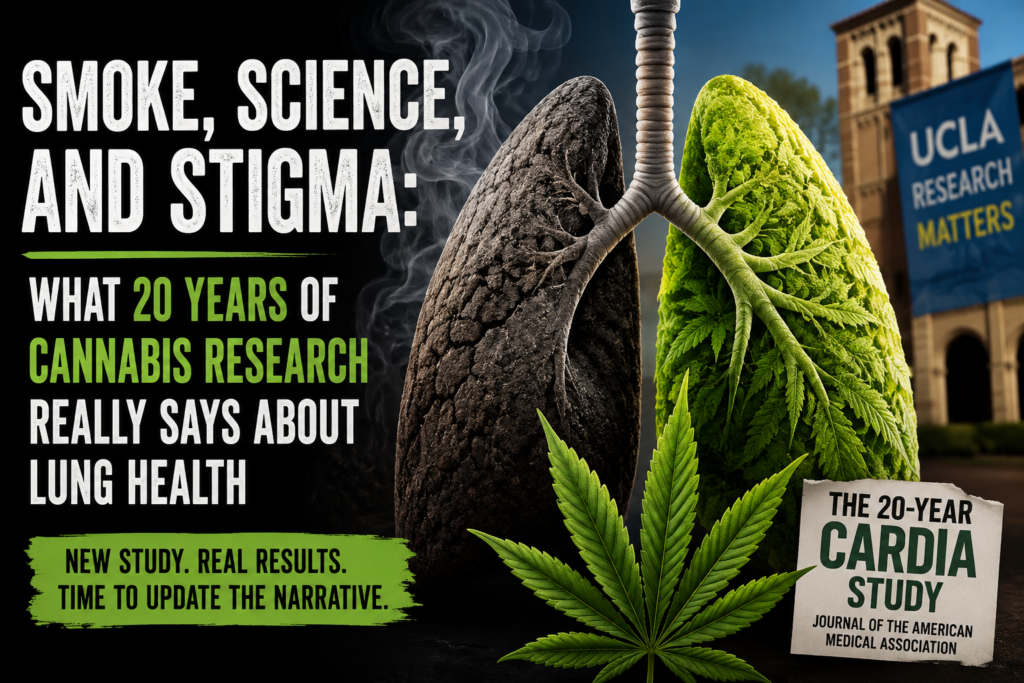
Smoke, Science, and Stigma: What 20 Years of Cannabis Research Really Says About Lung Health
For decades, America was sold a familiar line: smoke cannabis long enough, and your lungs would eventually resemble an ashtray.
But one of the largest long-term pulmonary studies ever conducted quietly complicated that narrative in a way prohibitionists rarely mention.
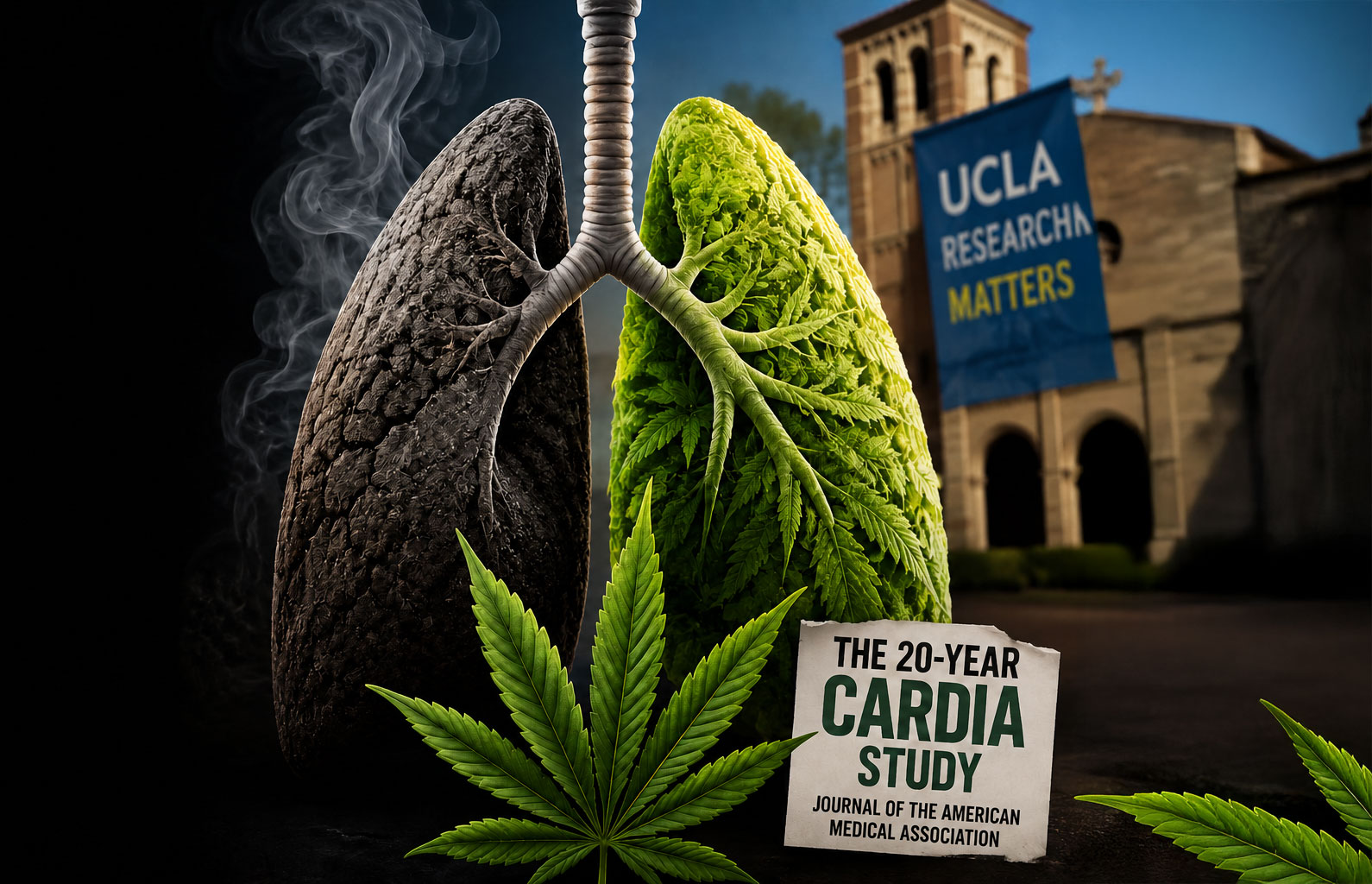
A landmark 20-year study published in the Journal of the American Medical Association tracked more than 5,000 young adults as part of the federally funded CARDIA project, measuring the long-term respiratory effects of both tobacco and cannabis use. Researchers expected cannabis smokers to follow a similar decline as cigarette users.
That didn’t happen.
Instead, while tobacco smokers showed the expected deterioration in lung function over time, moderate cannabis users often maintained normal pulmonary performance and in some cases demonstrated slightly higher forced vital capacity, essentially the total volume of air the lungs can hold, than both cigarette smokers and non-smokers.
Now before anyone starts claiming joints are the next yoga class, let’s be clear: researchers did not conclude cannabis smoking is “healthy” for lungs.
Heavy chronic use can still irritate airways and contribute to bronchitis-like symptoms. But what this study and decades of work from UCLA pulmonologist Dr. Donald Tashkin helped establish is that cannabis simply does not appear to produce the same progressive, catastrophic lung decline associated with tobacco.
That matters.
Because for years, public health messaging often lumped cannabis and cigarettes together as near respiratory equals, despite growing evidence that the biological outcomes are more nuanced.
Researchers theorized several factors may explain the difference, including cannabis users’ deeper inhalation patterns potentially strengthening respiratory muscles, differing frequency of use compared to tobacco, and unique cannabinoid interactions within the body.
In plain English: the science turned out to be more complicated than the scare campaigns.
And perhaps that’s the real story here.
This doesn’t mean everyone should rush to light up under the illusion that cannabis smoke is harmless. Combustion of any plant material introduces irritants. But it does mean policymakers, physicians, and the public should be willing to update outdated assumptions when large-scale evidence challenges decades-old dogma.
For the cannabis industry, this study has become another reminder that many of the plant’s long-repeated dangers were often overstated, oversimplified, or politically weaponized during prohibition.
For consumers, it’s a call for realism over mythology, both positive and negative.
Cannabis isn’t a miracle lung tonic.
But according to some of the strongest long-term pulmonary data available, it also may not be the respiratory villain many were taught to fear.
And in an era where cannabis policy is increasingly shaped by science instead of stigma, that distinction matters more than ever.
Sometimes the truth isn’t that cannabis is perfectly safe.
Sometimes the real headline is that it may not be nearly as dangerous as we were told.