Texas Promised Medical Cannabis. A Firefighter Put It to the Test.
San Antonio firefighter’s termination over prescribed THC is exposing the growing conflict between Texas medical cannabis law and workplace policy.
A San Antonio firefighter and paramedic says he lost his career over a legally prescribed medical cannabis product, and now the city may be facing a legal battle with the firefighters union over it.
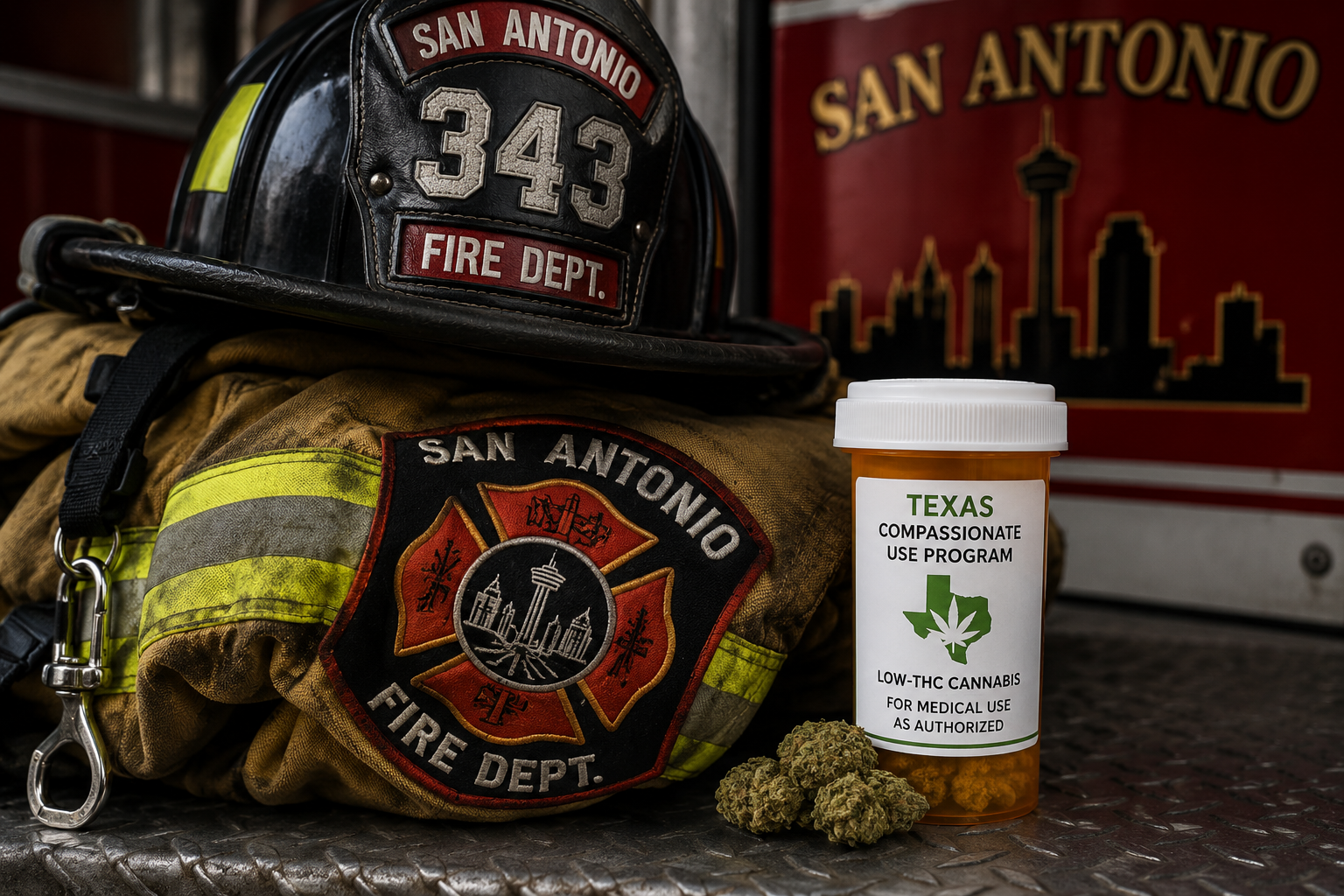
Zachary Crumley, who joined the San Antonio Fire Department in 2018, was reportedly terminated after testing positive for THC despite possessing a valid prescription through Texas’ Compassionate Use Program. According to Crumley, he used low-THC cannabis prescribed for a medical condition connected to injuries and conditions stemming from his work duties.
The case is quickly becoming another flashpoint in the growing debate surrounding cannabis, employment protections, and what “medical cannabis legalization” actually means in Texas.
Because while Texas politicians frequently point to the Compassionate Use Program as proof the state has embraced medical cannabis, stories like this continue exposing how limited those protections really are.
According to Crumley, he underwent a random drug test in November and immediately provided documentation showing he was a legal Compassionate Use patient. He was later placed on administrative leave after testing positive for THC and required to complete a medical evaluation regarding his fitness for duty.
By December, he was informed he had been deemed unfit for duty.
“The issue was not that I had ever been impaired at work,” Crumley stated. “The issue was not that I had failed to perform the essential functions of my job. The issue is simply that the psychiatrist the city sent me to did not believe a THC prescription is compatible with the duties of a first responder.”
That distinction matters.
At no point has the city accused Crumley of being impaired while responding to emergencies, operating equipment, or performing medical duties. Instead, the dispute centers around the mere presence of THC in his system and whether cannabis use under Texas law can coexist with public safety employment.
Public Safety vs. Medical Cannabis
City officials maintain that firefighter safety standards must remain strict.
San Antonio Fire Chief Valerie Frausto stated that the city has a responsibility to ensure firefighters are not impaired while carrying out critical emergency duties. City Attorney Andy Segovia similarly defended the city’s actions, stating that neither state law nor the collective bargaining agreement requires the city to allow “unfettered use of medical marijuana by a firefighter in a public safety role.”
But critics argue the situation highlights a larger problem with cannabis policy nationwide, especially in states like Texas where medical cannabis exists in a legal gray area.
Unlike alcohol, THC can remain detectable in someone’s body for days or even weeks after use, particularly with regular low-dose medical products. That means a positive THC test alone does not necessarily indicate impairment at work.
And that’s where the legal and scientific conflict becomes unavoidable.
Union Threatens Legal Action
The San Antonio Professional Firefighters Association alleges the city violated its collective bargaining agreement, which reportedly states that positive drug tests should not automatically count against firefighters if the circumstances were related to lawful rather than illicit use.
Union President Joe Jones says Crumley is not the only firefighter affected.
According to the union, there have been at least five instances involving firefighters with Compassionate Use prescriptions who faced disciplinary action after testing positive for THC. The union has now threatened legal action if Crumley is not reinstated.
The situation also comes just weeks after a Bexar County judge denied the union’s request to stop the city from placing firefighters with Compassionate Use prescriptions on leave following positive cannabis tests.
A Growing Problem in Texas
As Texas continues slowly expanding its medical cannabis program, conflicts like this are likely to become increasingly common.
The state now allows low-THC cannabis prescriptions for conditions including PTSD, chronic pain, epilepsy, cancer, and Crohn’s disease. But many patients continue discovering that legal access does not necessarily come with meaningful workplace protections.
And that contradiction is becoming harder to ignore.
Texas cannot continue promoting medical cannabis as legitimate healthcare while allowing patients to risk losing careers over the lawful use of prescribed products with no evidence of workplace impairment.
At some point, lawmakers, employers, unions, and courts are all going to be forced to answer the same uncomfortable question:
Are medical cannabis patients actually being treated like patients… or are they still being treated like criminals with paperwork?