Indica vs. Sativa Is a Myth. So Why Are We Still Shopping This Way?
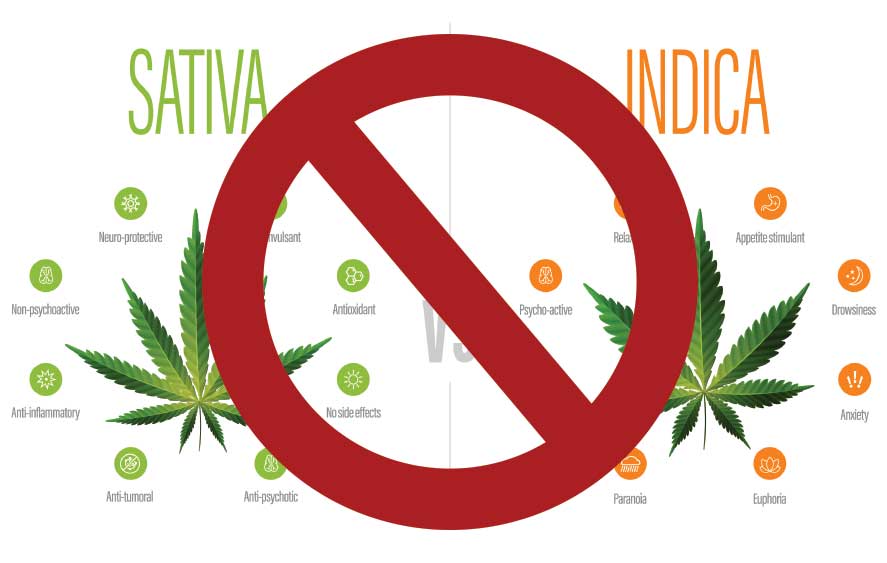
Walk into almost any dispensary and the menu still divides cannabis into three familiar camps: indica to relax, sativa to get moving, hybrid for something in between. It’s easy, it’s useful, and according to a growing pile of cannabis research, it’s also a pretty lousy way to predict what the flower in that jar is actually going to do to you.
The shorthand is so deeply embedded in cannabis culture that most of us barely question it anymore.
Need something for the couch? Indica.
Going to a concert? Sativa.
Want to split the difference? Hybrid.
I’ve used the terms. You’ve probably used them. Budtenders use them every day.
The problem is that cannabis never agreed to follow our labeling system.
How Indica and Sativa Got Here
The words themselves aren’t made up.
Swedish botanist Carl Linnaeus described Cannabis sativa in 1753. A few decades later, French naturalist Jean-Baptiste Lamarck described Cannabis indica after studying cannabis from India that appeared physically different from the European plants Linnaeus had documented.
They were talking about botany.
Plant structure. Geography. Leaf shape. Growth patterns.
They were not describing one plant that makes you clean the garage and another that makes you melt into the couch.
That part came much later.
As cannabis moved around the world and breeders crossed plants from different regions over generations, those once-clean geographic distinctions became increasingly muddy. Somewhere along the way, the cannabis industry transformed botanical terminology into a consumer effects guide.
Indica became relaxing.
Sativa became uplifting.
Hybrid became the catch-all in the middle.
It made shopping easier. That doesn’t mean it made shopping more accurate.
The Genetics Don’t Back It Up
Researchers have been poking holes in the modern indica-sativa system for years.
A major study published in Nature Plants in 2021 compared the genetics and chemical profiles of hundreds of cannabis samples sold as indica and sativa.
The labels showed surprisingly little relationship to the plants’ overall genetic ancestry.
In other words, two jars sitting on opposite sides of the dispensary menu may not be nearly as genetically different as those labels suggest.
Researchers did find some connections between commercial labels and certain aromatic compounds. Flower marketed as indica, for example, was somewhat more likely to contain higher levels of particular terpenes.
But that’s a long way from proving that indica equals sleepy and sativa equals energetic.
Another study, published in 2022, examined nearly 90,000 commercial cannabis samples across six states.
Same basic problem.
The familiar categories didn’t consistently match the actual chemical diversity of the products.
That’s a hell of a sample size for something supposedly as simple as “indica makes you tired.”
What’s Actually in the Jar?
Cannabis is chemistry.
THC is obviously a huge part of the equation, but it isn’t the entire equation. The plant produces dozens of cannabinoids, including CBD, CBG, CBC, THCV and plenty of others that researchers are still trying to understand.
Then there are terpenes.
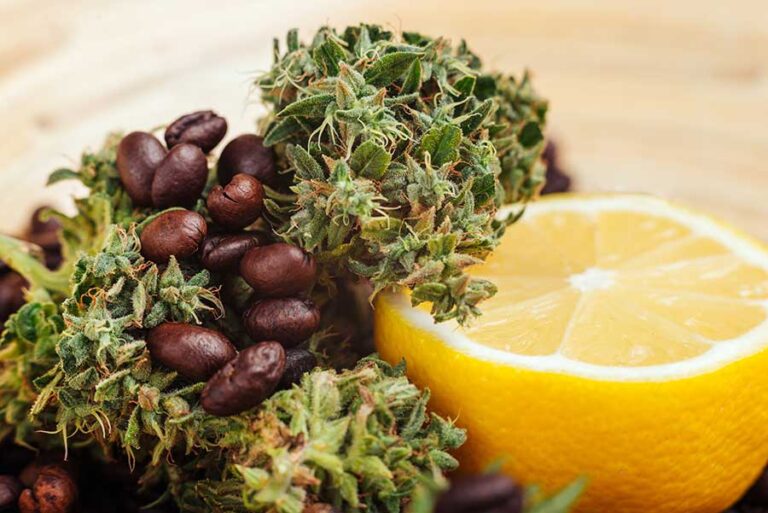
Myrcene. Limonene. Pinene. Linalool. Caryophyllene. Terpinolene.
They’re responsible for much of what makes cannabis smell and taste the way it does. Citrus. Pine. Gasoline. Fruit. Flowers. Pepper. Funk. That unmistakable skunkiness that can escape a sealed container and announce itself three rooms away.
For a while, the industry responded to the problems with indica and sativa by essentially replacing them with another simple formula.
Forget the strain. Look at the terps.
I’ve said versions of that myself.
Today, I think that needs a little more nuance too.
Terpenes unquestionably matter to aroma and flavor. Researchers have also found biological activity that suggests some terpenes could influence the cannabis experience.
But we are nowhere near the point where a terpene chart can reliably tell you exactly how a particular flower will make you feel.
Myrcene does not come with a guaranteed bedtime.
Limonene is not a little molecule of happiness.
Pinene isn’t Adderall hiding inside a plant.
The research is much more interesting than that, and much less settled.
What About the Entourage Effect?
This is where the conversation gets especially complicated.
The entourage effect is the idea that cannabinoids, terpenes and other cannabis compounds interact in ways that change or shape the overall experience.
It’s a compelling theory. It may also turn out to explain part of why whole-plant cannabis can feel different from isolated THC.
There is laboratory evidence showing interactions among some of these compounds, and researchers continue to find reasons to investigate those relationships.
What we don’t have yet is strong human evidence allowing us to confidently predict an effect based on a terpene profile alone.
That distinction matters.
Cannabis has spent decades suffering from bad science on one side and overly enthusiastic claims on the other. We don’t need to correct old misinformation by creating new folklore.
Sometimes “we don’t know yet” is the most scientifically honest answer available.
Genetics Aren’t the Whole Story Either
Even knowing the genetics doesn’t completely solve the problem.
How cannabis is grown matters.
Light matters. Nutrients matter. Temperature matters. Harvest timing matters. Drying and curing matter. Storage matters.
Even genetically identical plants can finish with measurable differences in cannabinoids and terpenes when grown under different conditions.
Which brings us to strain names.
You may absolutely love Blue Dream from one grower and find another grower’s Blue Dream completely forgettable.
Both jars can say Blue Dream.
That doesn’t guarantee they share identical genetics, identical chemistry or anything close to an identical growing environment.
Strain names can be useful. They can also be branding.
Anyone who has spent enough time around cannabis eventually learns that the name on the jar only gets you so far.
And Then There’s You
This part may be the biggest variable of all.
Two people can smoke the exact same flower and describe two very different experiences.
Tolerance matters.
Dose matters.
Frequency of use matters.
Method of consumption matters.
Your metabolism matters.
Your own endocannabinoid system matters.
Hell, your environment probably matters more than we give it credit for.
The same cannabis you enjoy with friends at a concert may feel completely different sitting alone on the couch at midnight.
Yet dispensary menus routinely promise effects such as “creative,” “focused,” “euphoric,” “sleepy” or “social” as though those experiences are programmed directly into the plant.
They aren’t.
At best, those descriptions are patterns reported by some consumers.
They are not guarantees.
It’s Bigger Than the Terps
When I originally wrote this article in 2023, my conclusion was essentially: forget indica and sativa, it’s all about the terpenes.
I wouldn’t write that today.
Not because terpenes don’t matter. They absolutely do.
But replacing one oversimplified system with another isn’t much of an upgrade.
If you really want to understand your cannabis, look at everything you can.
Cannabinoid content. Terpene profile. Potency. Grower. Genetics. Cultivation methods. Dose. Consumption method.
Then pay attention to the one thing no laboratory report can fully predict: how it actually makes you feel.
If you find a cultivar that consistently works for you, remember who grew it. Look at its chemical profile when that information is available. Compare it with other flower you enjoy.
Over time, you may start recognizing your own patterns.
That’s far more useful than assuming every jar marked indica is going to tuck you into bed.
So Are Indica and Sativa Completely Meaningless?
No.
The terms have legitimate botanical history. They can still describe certain physical characteristics and historical lineages. In today’s market, they may even correlate loosely with certain aroma profiles.
And after decades of use, they aren’t disappearing from dispensary menus tomorrow.
I don’t really think they need to.
If someone tells me they prefer indicas, I’m not going to interrupt the joint and give them a botany lecture. They may have legitimately noticed that cannabis sold under that label tends to work better for them.
Just understand what the label can and cannot tell you.
“Indica” is not a sedative ingredient.
“Sativa” is not a stimulant.
And “hybrid” is increasingly close to saying, “Yeah, it’s cannabis.”
We’ve spent decades trying to squeeze one of the most chemically complicated plants on Earth into three boxes.
Maybe the plant was never the problem.